
Where CHO Application Forms Are Released
The Step Everyone Skips (And Pays For)
What You Should Prepare Before Opening the Form
How the CHO Application Process Usually Works
Registration: This Is Your Digital Identity
Filling Personal Details: Do Not Trust Your Memory
Educational Details: This Is Not a Casual Section
Professional Registration: High-Risk Area
Uploading Documents: This Is Not Just Uploading
The Preview Page: This Is Your Safety Net
Payment of Fees (If Applicable)
After Submission: What You Must Do
Why So Many Applications Get Rejected
Correction Window: Your Second Chance
Final Advice
Final Word
Start Your Preparation Now!
CHO Application Form Guide 2026: How to Apply Safely Without Losing Your Seat to Small Mistakes
Step-by-step CHO application process with common mistakes, document tips, and safe submission checklist

For most aspirants, the CHO application form feels like the easiest part of the entire journey. There is no syllabus to study, no mock tests to attempt, no pressure of negative marking. It looks simple: fill in your details, upload some documents, and click submit.
But this is exactly why it is dangerous.
Every year, thousands of candidates who are perfectly eligible and academically strong lose their chance before the exam even begins-simply because they made small, avoidable mistakes in the application form.
Not because they were careless. But because they didn’t realize how strict this stage really is.
The CHO application form is not a casual form. It is a legal declaration of your identity, qualifications, and eligibility. What you write here follows you all the way to document verification and joining. And once you submit it, most of it cannot be changed.
This guide will help you fill your form slowly, safely, and correctly-so that your hard work is not wasted before the exam even starts.
Where CHO Application Forms Are Released
CHO recruitment does not happen through a single national portal. Each state conducts its own recruitment, using its own website. This could be the state NHM portal, the state health department website, or sometimes a state recruitment board’s page.
This is why you should never blindly trust forwarded links from Telegram, WhatsApp, or YouTube. Many fake pages look professional and convincing.
Always make sure you are on the official website. If the URL feels strange, has too many ads, or redirects you oddly, stop.
Your first job is not to fill the form. Your first job is to find the right form.
The Step Everyone Skips (And Pays For)
Before you type a single word into the form, download the official notification PDF and read it carefully.
Not skim. Not scroll. Read.
That PDF defines the rules of the game. It tells you who is eligible, who is not, what documents are acceptable, what certificates are mandatory, what causes rejection, and what will be verified later.
If you skip this step, you are not applying-you are gambling.
What You Should Prepare Before Opening the Form
Most mistakes happen because candidates start filling the form without preparing their documents first. They switch between folders, rename files, resize photos, and rush through details.
Don’t do that.
Create a folder on your device and keep all your documents ready before you begin. This usually includes your identity proof, photograph, signature, 10th certificate (for date of birth), 12th certificate, nursing degree or diploma, all mark sheets, nursing council registration certificate, renewal certificate if applicable, category certificate if applicable, domicile or language certificate if required, and any community health certificate if mentioned in the notification.
Once everything is in one place, you can fill the form calmly instead of panicking.
How the CHO Application Process Usually Works
Although portals differ slightly from state to state, the structure is usually the same. You will first register, then log in, then fill your personal details, educational details, professional registration details, upload documents, preview everything, and finally submit.
Each of these steps may look simple. None of them actually are.
Registration: This Is Your Digital Identity
Registration is where the system creates your unique candidate profile. You’ll usually be asked for your name, mobile number, email, and date of birth.
These details must match your certificates exactly. Even at this stage, a spelling error can follow you all the way to document verification.
Once you register, you’ll receive a login ID and password or OTP. Save these carefully. If you lose them, you may lose access to your form.
Filling Personal Details: Do Not Trust Your Memory
This is one of the most dangerous sections because people rely on memory instead of documents.
Your name, your parents’ names, and your date of birth must match your certificates exactly. Not “almost.” Not “close enough.” Exactly.
Do not use short forms. Do not use nicknames. Do not use initials.
If your certificate says “Anjali Kumari Sharma,” do not write “Anjali Sharma.”
These things matter.
Educational Details: This Is Not a Casual Section
Here you will enter your board, university, year of passing, degree name, and marks.
This must match your certificates word-for-word.
If your degree says Post Basic B.Sc Nursing, do not write B.Sc Nursing. If your certificate says General Nursing and Midwifery, do not shorten it to GNM unless the portal allows that exact format.
These “small” mismatches become big problems during document verification.
Professional Registration: High-Risk Area
This section causes more rejections than almost any other.
You will be asked for your nursing council name, registration number, registration date, and validity.
Many candidates lose their chance because: • Their registration has expired • They typed the wrong number • They selected the wrong council • Their certificate does not match the portal entry
Double-check this section. Then check it again.
Uploading Documents: This Is Not Just Uploading
Every portal mentions file size, format, and sometimes resolution.
If it says JPG, upload JPG. If it says 50 KB, do not upload 500 KB.
Never upload blurry photos, cropped certificates, screenshots, or password-protected PDFs.
If the officer cannot read your document, they are legally allowed to reject you.
The Preview Page: This Is Your Safety Net
Most candidates rush through this page. That’s a mistake.
This is your last chance to catch errors.
Read every field slowly. Check spellings. Check numbers. Check category. Check degree name. Check uploads.
Once submitted, most portals will not allow changes.
Payment of Fees (If Applicable)
Some states charge application fees, some don’t.
If payment is required, do it carefully. Use stable internet. Don’t refresh the page. Save the receipt. Take screenshots.
If money is deducted but the form does not show “submitted,” contact the helpdesk immediately.
After Submission: What You Must Do
Once your form is submitted, download the confirmation PDF. Save it. Print it.
You may need this later during admit card stage, document verification, or joining.
Do not assume you can download it again later.
Why So Many Applications Get Rejected
Most rejections do not happen because candidates are ineligible.
They happen because of: • Name mismatches • Wrong degree names • Wrong category selection • Expired registration • Missing certificates • Wrong file format • Typing errors
All of these are preventable.
Correction Window: Your Second Chance
Some states open a short correction window. If they do, use it immediately.
Do not delay. Do not assume. Do not ignore.
Once it closes, nothing can be changed.
Final Advice
Treat the CHO application form like an exam.
Not because it is difficult-but because it is unforgiving.
One careless click can cost you a year.
Slow down. Read carefully. Check twice. Submit once.
Final Word
CHO preparation requires more than just books and random practice. It requires pattern familiarity, state-specific focus, and continuous performance tracking.
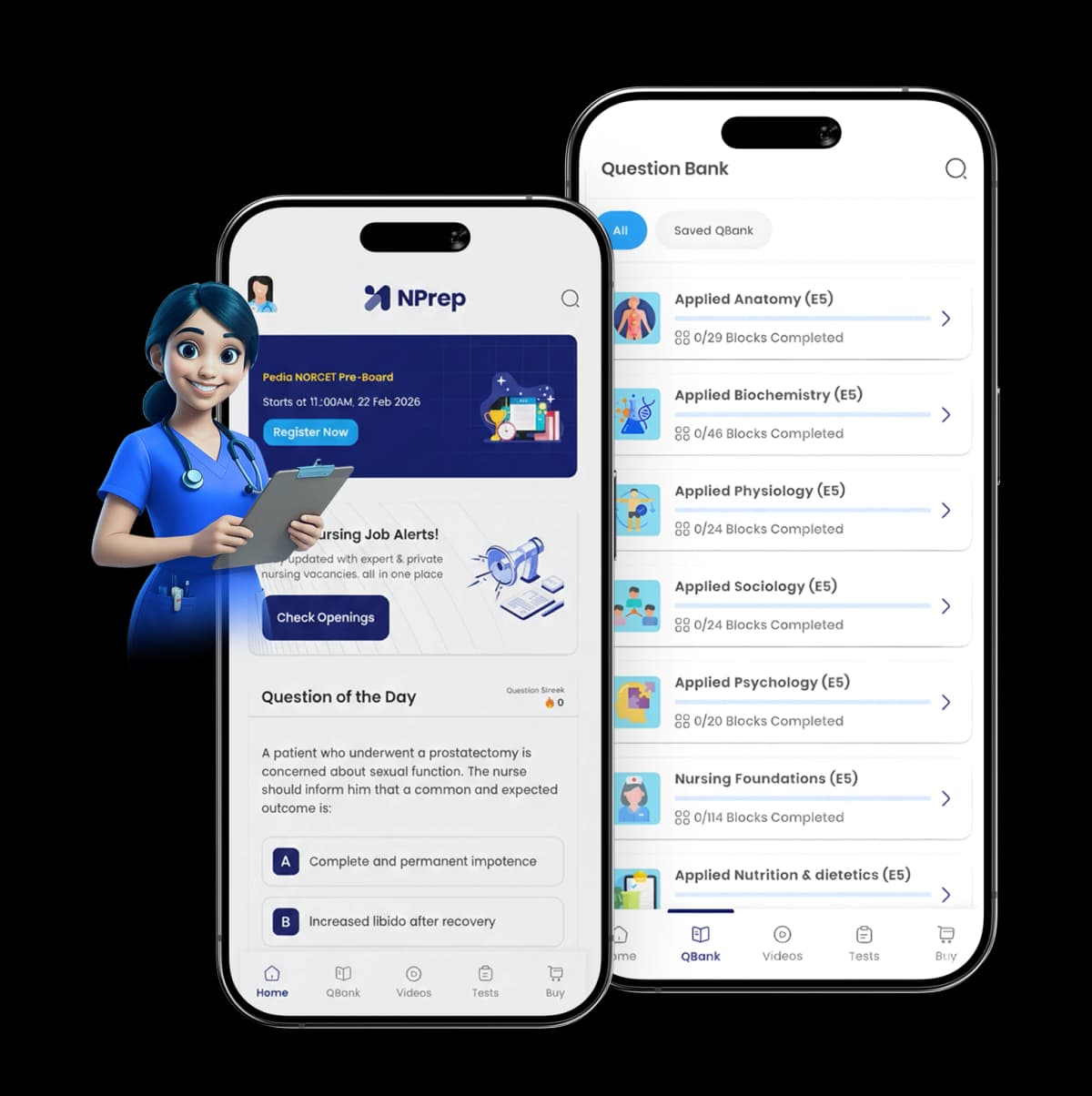
NPrep’s CHO ecosystem is designed specifically for this.
Instead of generic nursing content, NPrep provides:
- State-targeted CHO mock tests
- Nursing-heavy question banks
- Chapter-wise analytics
- PYQ-mapped practice
- Live strategy guidance
- Personalized dashboards
This allows aspirants to study with direction, not confusion.
NPrep is not just a test series. It is a complete CHO preparation ecosystem.
Start Your Preparation Now!
About the Author
D
Dr. Prince Kaushik
NPrep Expert
Similar Blogs For You
RRB Nursing Superintendent 2025 – Application Process & Correction Guide
8 min Read • Jan 7, 2026
NORCET 10 Application Form 2026 Out Now! Apply Today for AIIMS NORCET 10
5 min Read • Feb 28, 2026
RUHS CUET 2026 - Complete Guide: Important Dates, Application, Exam & Result
6 min Read • Jan 28, 2026
NORCET 10 Application Form 2026 Released: Check Dates, Eligibility, Fees, Exam Schedule & How to Apply
6 min Read • Feb 13, 2026

Your Step-by-Step Guide to the AIIMS NORCET Application Process
4 min Read • Dec 29, 2025